

















Orbit Beats: The High-Stakes Rhythm Challenge That Redefines Precision
Every now and then, a game comes along that proves simplicity in design can hide truly brutal difficulty. Orbit Beats is that game. If you thought you had your rhythm game credentials sorted, prepare for a serious test of your twitch reflexes and auditory focus. This isn’t about mashing buttons; it’s about achieving a perfect, almost meditative synchronization between sight, sound, and a single, critical click.
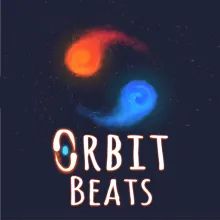
At its core, Orbit Beats tasks you with managing the delicate, high-stakes dance of two celestial bodies: the Fire and Ice planets. These cosmic companions are tethered together, perpetually orbiting each other as they traverse an impossibly narrow, winding track. The only way to keep them moving—and crucially, keep them from tumbling into the abyss—is by tapping or clicking in flawless sync with the underlying musical beat.
The One-Button Tightrope Walk
Orbit Beats strips away every unnecessary mechanic, leaving you with just one input: the tap. Each successful tap advances the two planets exactly one step along the path. This deceptively simple mechanism is the source of both the game’s addictive nature and its punishing difficulty.
The moment you start a level, the pressure is on. You must nail the very first beat perfectly, or the run ends before it even begins. From there, maintaining the flow state is everything. You aren’t just reacting; you are proactively guiding your duo through a geometric gauntlet.
What makes this truly engaging is how the environment constantly challenges your timing. Straightaways might allow for a steady, predictable rhythm, but the tracks rarely stay cooperative for long.
- Nailing the Start: Watch the countdown closely. The initial input sets the pace, and a fraction of a second off means an instant reset.
- Adapting to Geometry: The path twists into sharp zigzags, tight spirals, and sudden, asymmetrical curves. These changes demand instantaneous adjustments to your tapping cadence. You might need a quick double-tap for a sharp corner or a slightly delayed beat for a wider turn.
- The Cost of Error: A single mistimed click—too early or too late—breaks the planets’ fragile balance. They lose footing and drop off the track, sending you back to the start or the last checkpoint. This high consequence ensures that every single tap feels significant.
When the Beat Becomes the Map
As you progress through the different worlds of Orbit Beats, the complexity ramps up dramatically. The game cleverly integrates the visual challenge of the path with the auditory cue of the music. The beat isn’t just background noise; it’s the blueprint for survival.
Later levels introduce increasingly erratic path designs, forcing players to rely less on visual cues and more on internalizing the rhythm patterns. It’s a fantastic exercise in concentration, demanding that you listen intently while simultaneously processing the complex geometry unfolding onscreen. This synergy between ear and hand is what separates the casual player from the true rhythm master.
If you enjoy games where mastery comes through absolute precision and where failure is always your own fault, Orbit Beats is a genuinely compelling experience. It’s the kind of game you pick up for five minutes but end up playing for an hour, chasing that elusive perfect run. Get ready to test the limits of your timing—you might find yourself surprised by how challenging two little orbiting planets can be.